HE CE19 - Aerial Work Platform Training

Program Overview
This one-day Aerial Work Platform (AWP) Training course is designed to provide participants with the knowledge and basic practical skills required to safely operate Aerial Work Platforms (sometimes called Elevated Work Platforms or Aerial Lifts) in mining, construction, industrial, and related work environments.

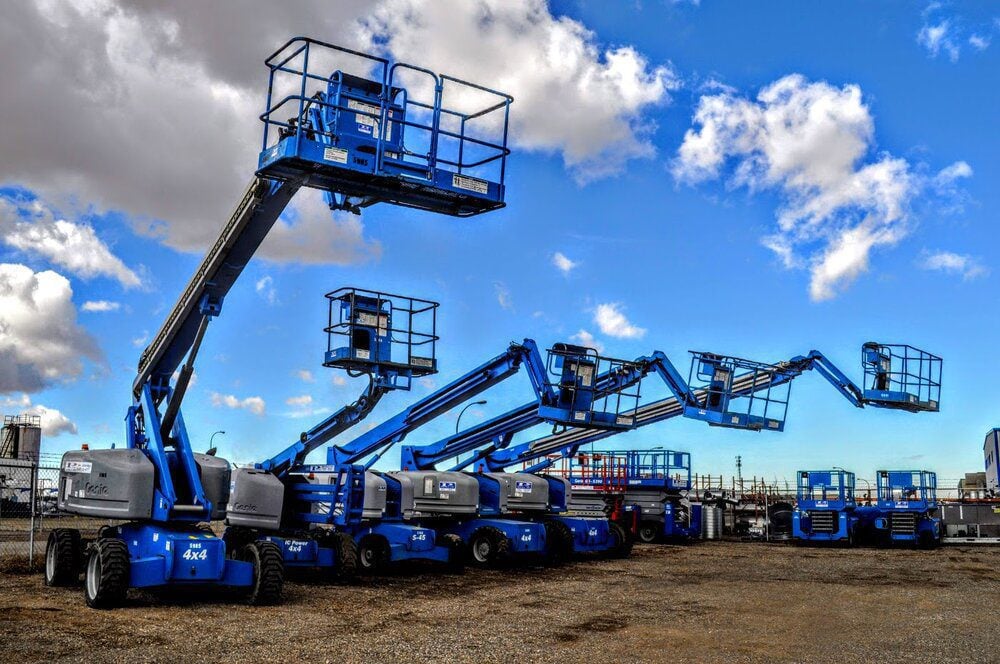
The course covers the safe operation of common types of Aerial Work Platforms, including scissor lifts, vertical mast lifts, articulating boom lifts, and telescopic boom lifts. Participants will learn about AWP components and controls, pre-operational inspections, hazard assessment, safe operating procedures, stability and load limitations, fall protection, positioning, travel, elevated work, and emergency procedures.

The course combines classroom theory with hands-on practical training. The practical portion of the course will use a telescopic boom lift to allow participants to apply the principles discussed in the classroom and become familiar with the inspection, controls, positioning, and safe operation of an AWP.

The course is intended for workers, contractors, maintenance personnel, labourers, operators, and other personnel who may be required to operate an Aerial Work Platform.
Note: The course provides foundational operator training and does not replace site-specific orientation, equipment-specific familiarization, manufacturer requirements, or any additional training required by legislation, employer procedures, or the worksite

Customized training solutions

No course offerings listed? We specialize in on-site and customized learning solutions that meet the unique needs of your business. By partnering with us, you can ensure that your employees receive the relevant training they need to excel in their roles and contribute to a safer work environment. Email us for more information.

Prerequisites
  • Fall Protection 
Student Materials

• CSA-approved steel-toe boots.
• Work gloves.
• Safety glasses.
• High visibility vest and Fall Protection equipment to be supplied by Yukon University.

Course Completion Requirements

• Students will gain knowledge and basic practical skills related to the safe operation of Aerial Work Platforms.
• Students must attend the classroom and practical portions of the course.
• Students must successfully complete the knowledge assessment.

Learning Outcomes

LEARNING OUTCOMES
Upon successful completion, participants will be able to:
• Identify common types of Aerial Work Platforms and their applications.
• Identify the major components and basic operating systems of an AWP.
• Select and use appropriate PPE for AWP operations.
• Conduct a basic hazard assessment before operating an AWP.
• Perform a pre-operational inspection of an AWP.
• Identify defects and conditions that could make an AWP unsafe to operate.
• Safely mount and dismount an AWP using appropriate access procedures.
• Identify and understand the purpose of primary controls, warning devices, alarms, and safety systems.
• Conduct a basic function test before operating an AWP.
• Explain the importance of maintaining safe clearances from people, equipment, structures, and overhead hazards.
• Recognize AWP blind spots, swing-radius hazards, crushing hazards, pinch points, and other workplace hazards.
• Explain the importance of ground conditions, machine stability, slope limitations, and load limits.
• Recognize hazards associated with overhead power lines and other overhead obstructions.
• Explain safe travel and positioning procedures for an AWP.

• Safely position an AWP for elevated work.
• Explain platform capacity, load limitations, and the effect of personnel, tools, and materials on platform capacity.
• Explain the purpose and proper use of fall protection systems.
• Recognize hazards associated with elevated work, including falling objects, falls from height, tip-over, and unexpected machine movement.
• Explain safe shutdown, parking, and securing procedures.
• Recognize emergency and unusual situations associated with AWP operation.
• Explain appropriate actions in the event of equipment malfunction, loss of power, entrapment, tip-over, or other emergency situations.
• Identify the importance of following the manufacturer's operating instructions, site-specific procedures, and applicable regulatory requirements.

CRN Instructional method Instructor Location Start date Seats available* Cost
90878 Face-to-face Synchronous Tomasz Wozniak Faro
8
Cost: $450.00
Tax: $22.50
Class schedule
Start date End date Room Monday Tuesday Wednesday Thursday Friday Saturday Sunday
Classroom - Face to Face - - - 8:30 AM - 4:00 PM - - -
90879 Face-to-face Synchronous Tomasz Wozniak Whitehorse (Ayamdigut)
8
Cost: $450.00
Tax: $22.50
Class schedule
Start date End date Room Monday Tuesday Wednesday Thursday Friday Saturday Sunday
Classroom - Face to Face M111 - - - - 8:30 AM - 4:00 PM - -