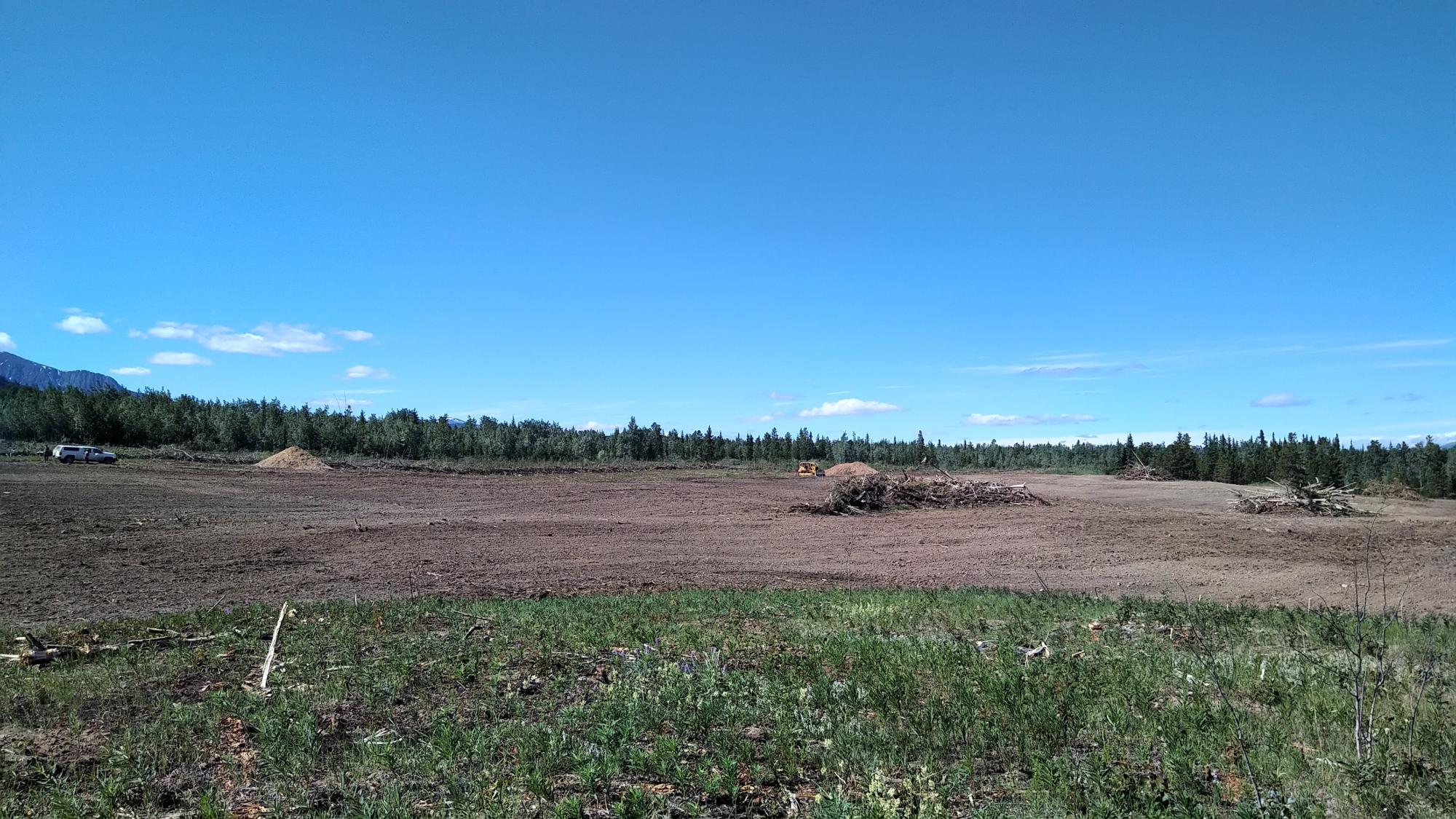
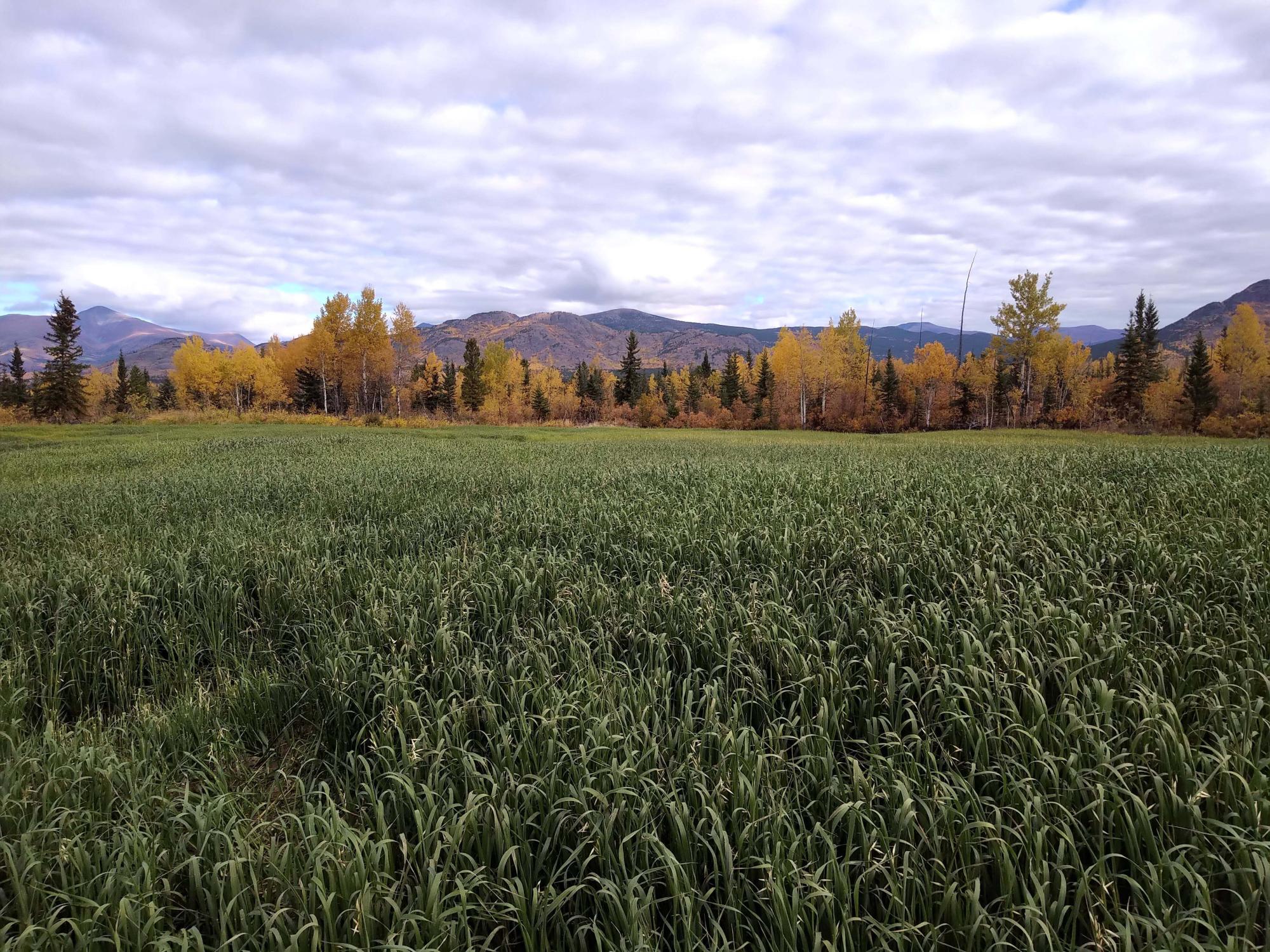
Summary: The Yukon Government Agriculture Branch investigated alternative methods of clearing forested land for agriculture, moving beyond the traditional clear-and-burn approach. The study explored two organic incorporation techniques: Forestry Mulching which involved shredding and churning organic materials into the upper soil layers; and Surface Mulching where the woody materials were shredded and stockpiled, and 1/3 of the material was spread on the surface each year of the trial. A field trial in the Murray Agricultural Subdivision compared these methods against conventional clearing and burning, with clearing taking place in 2020, and oats planted in 2021 and 2022.
Key Findings:
- Forestry mulching showed temporary nitrogen immobilization, resulting in lower crop yields and less healthy plants
- Conventional burning produced significantly higher greenhouse gas emissions
- Surface mulch and conventional treatments showed no significant differences in soil tests or yields
Cost Considerations:
- Conventional clearing was least expensive
- Forestry mulching was moderately costly
- Surface mulch treatment was most expensive due to material processing and annual spreading
Future years will continue monitoring soil chemistry, microbiology, and crop yields.
Follow up: Harvest yields at the site continue to be recorded by the Yukon Government. Year 3 was a poor growing year with very poor germination and growth due to a lack of precipitation at this non-irrigated site. However, years 4 and 5 have seen a turnaround in the treated plots, with significantly increased yields over the control plots, indicating this may be a beneficial approach to land conversion and field preparation. A summary video is available on the YG-EMR's YouTube.
Year: 2020-2022
Funder: Canadian Agricultural Partnerships, Agriculture and Agri-food Canada
Summary: After year 2 results from the land conversion trial showed continued nutrient immobilization in the mulch plots, the idea was raised of pre-composting wood chips before turning them into the soil. Key features of this approach would be low nitrogen levels in the chips and cold northern conditions. A review of the available literature was undertaken to explore the possibility of both low-nitrogen and cold-climate composting.
Year: 2023
Funder: Sustainable Canadian Agricultural Partnerships, Agriculture and Agri-food Canada
Report: Potential for Composting Wood Waste Under Northern Conditions.pdf
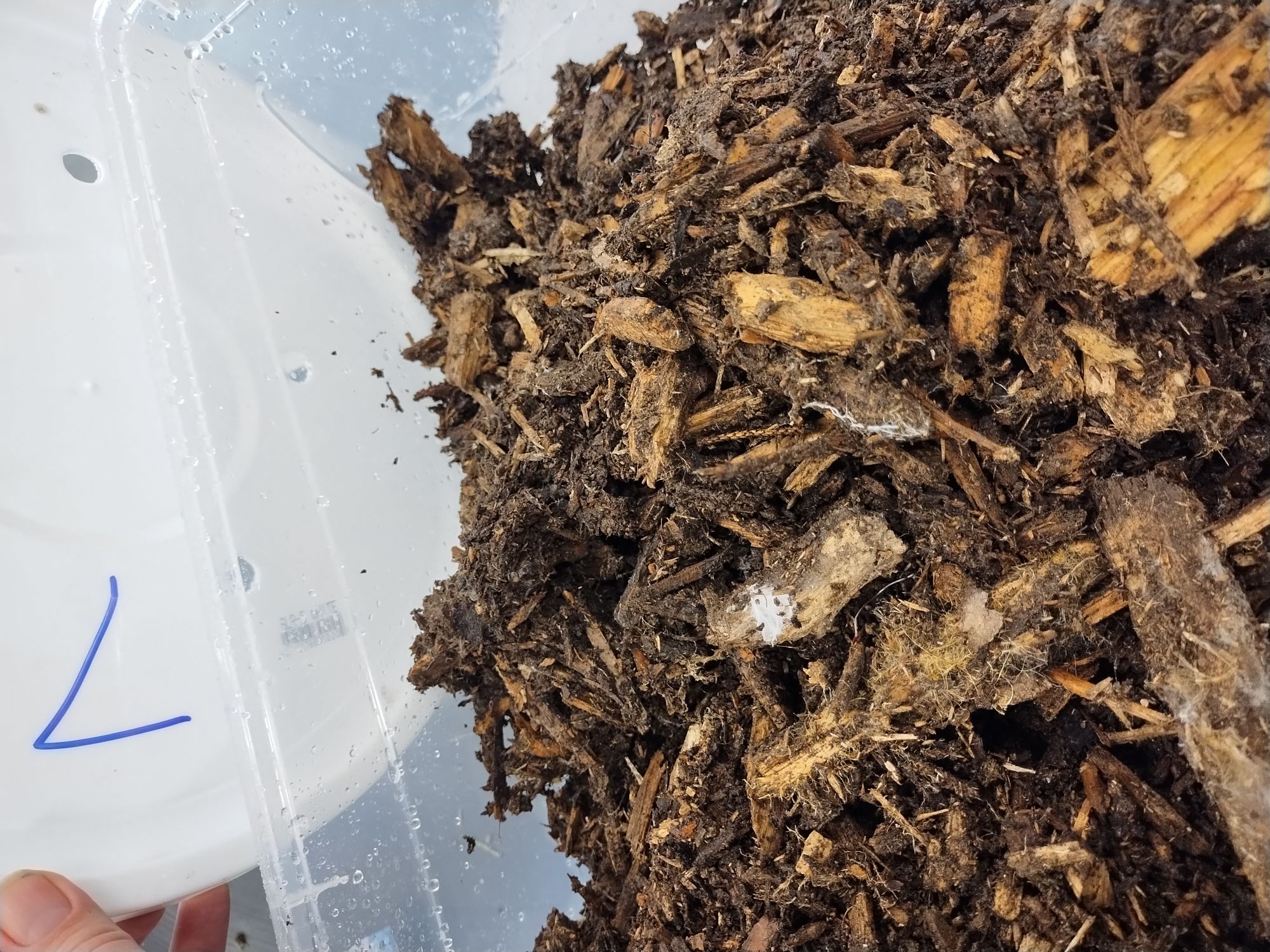
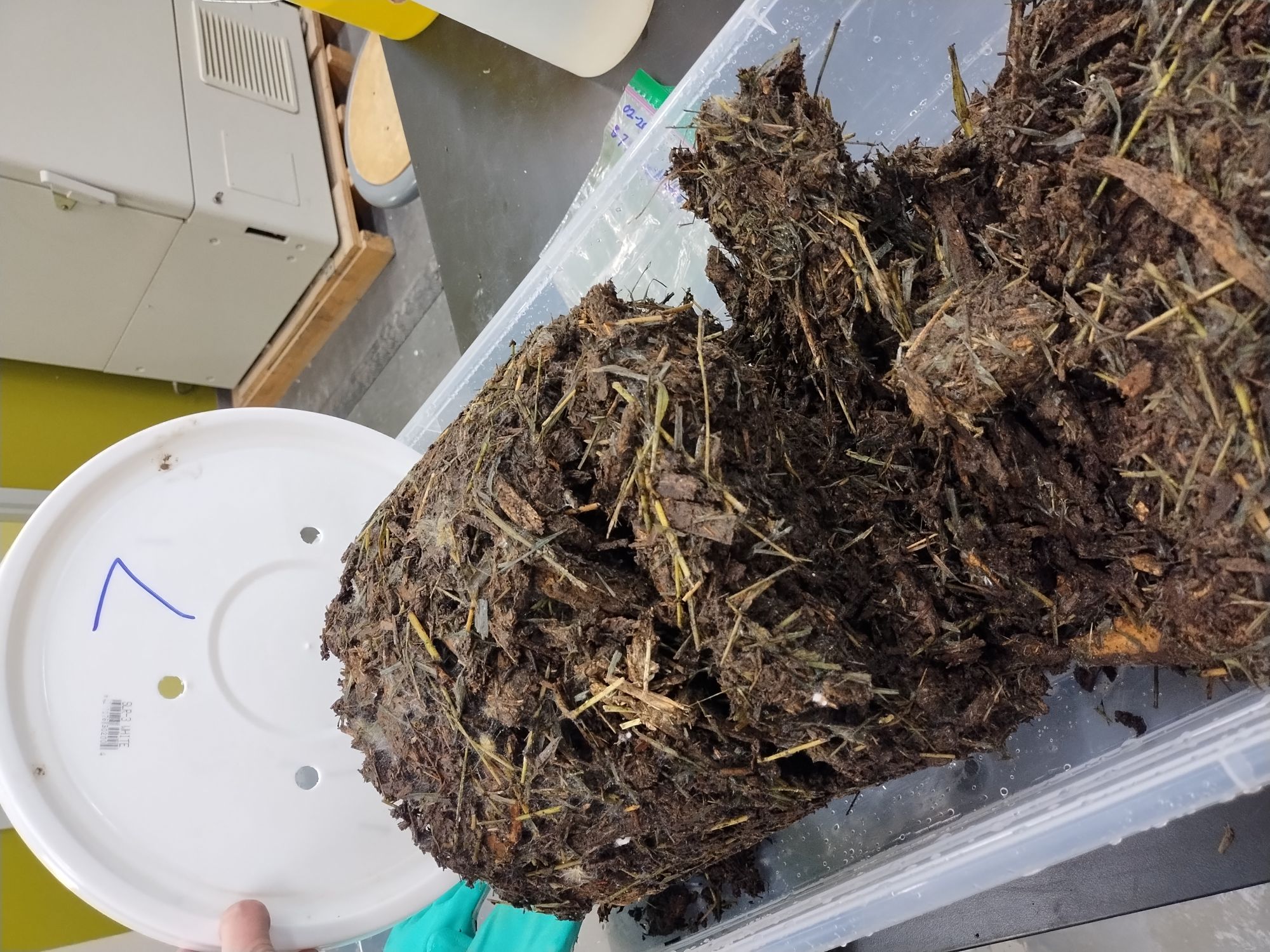
Summary: A lab trial evaluated different nitrogen amendments (alfalfa powder, blood meal, ammonium sulfate, and cattle manure), applied at two different rates. The month-long bench-top study used a series of vented 5-gallon buckets filled with moistened chips and the nitrogen amendments, and kept in a lab at ~20 °C. The alfalfa powder, blood meal, and cattle manure all showed utility as N amendments and stimulated microbial activity, whereas the ammonium sulfate was a poor addition for composting. As expected, much of the woody material remained, as it consists largely of highly recalcitrant (difficult to decompose) forms of carbon. However, decomposition of more labile (easily decomposed) material did occur, raising the question of how much decomposition is required before wood waste can be incorporated into soil without deleterious effects on available nitrogen? If labile carbon is decomposed, is the decomposition of recalcitrant carbon so slow that it wouldn’t compete with crop plants? A yard-scale composting trial followed by a growth trial was proposed to address this question.
Year: 2024-25
Funder: Yukon Government, Climate Change Secretariat
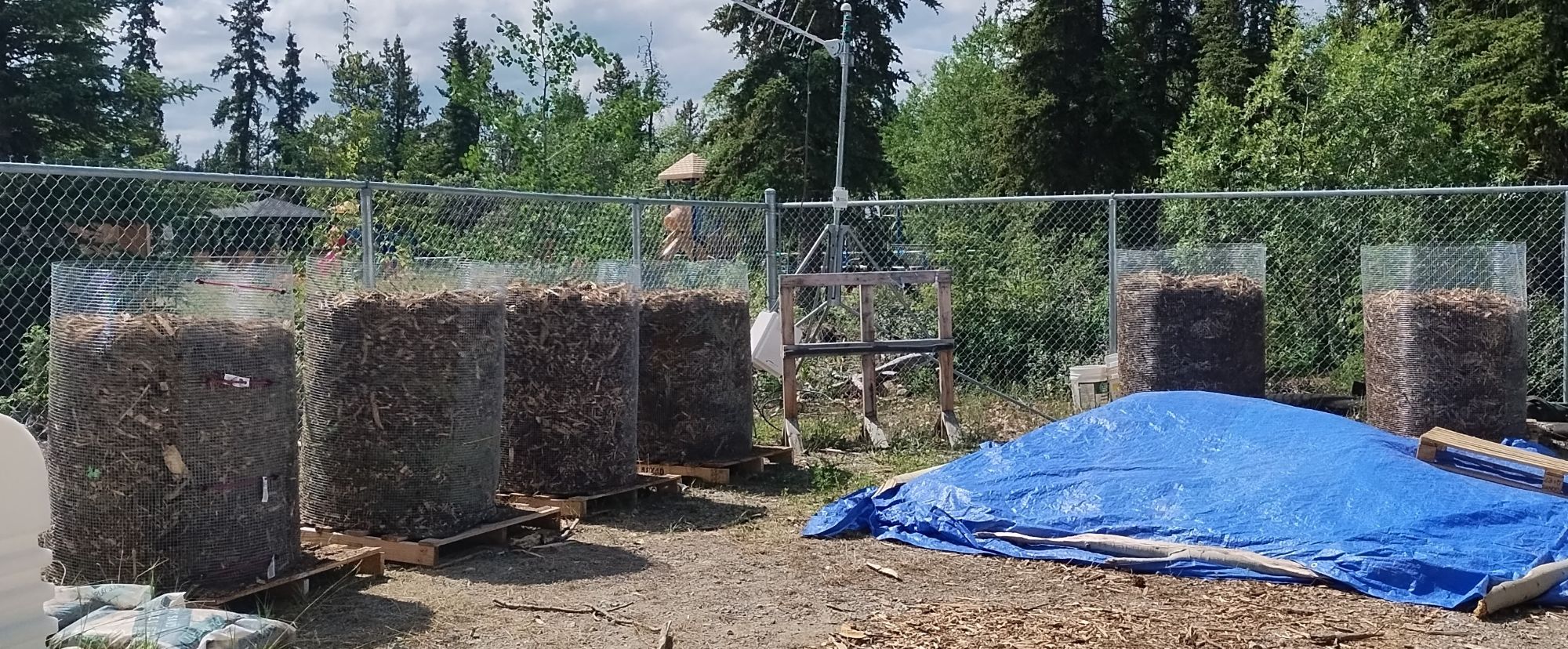
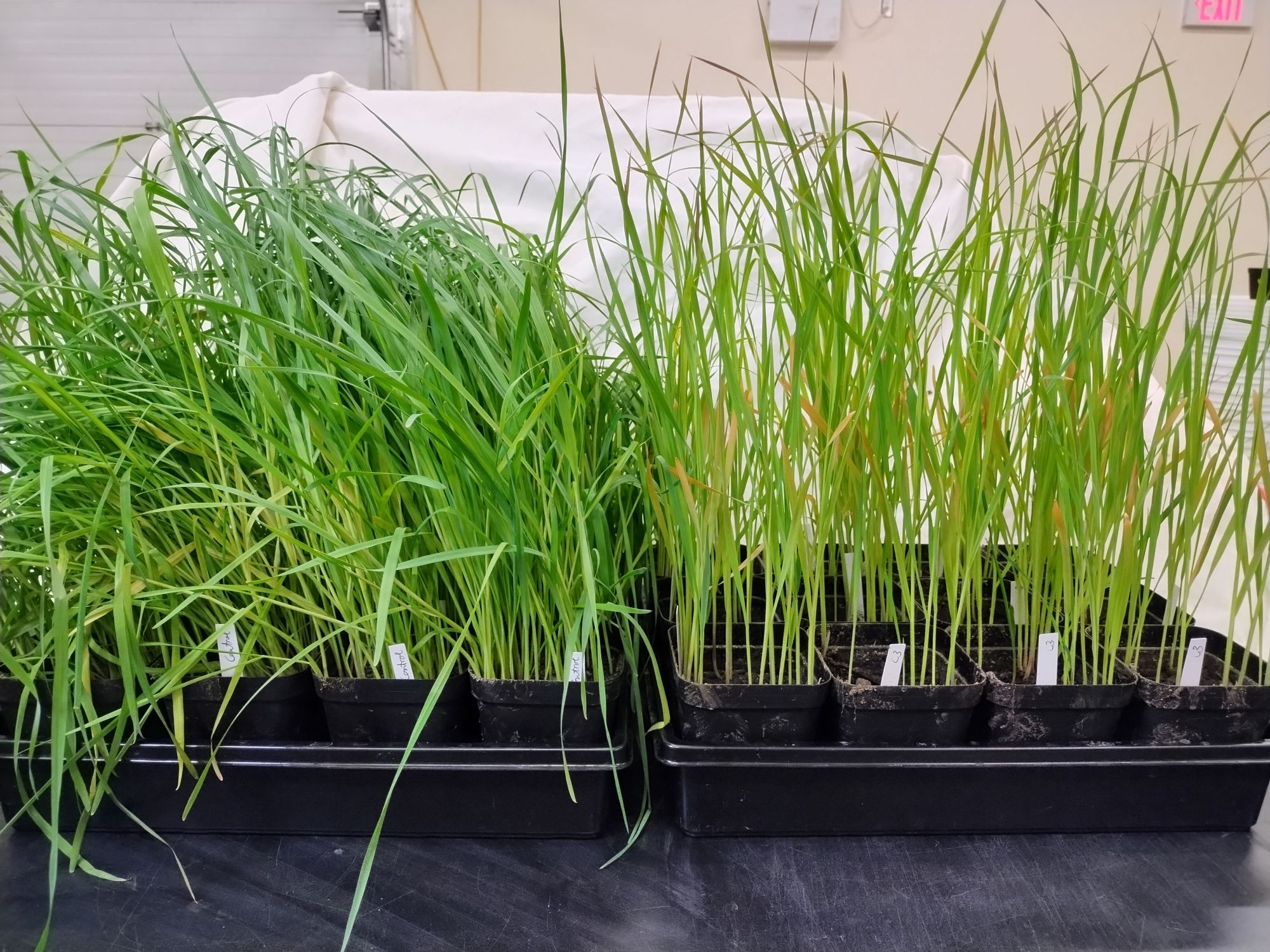
Summary: This trial explored whether one summer season of intentional pre-composting of woody chipped material could sufficiently decompose the most degradable carbon fraction and then form an appropriate soil amendment for field application the following year. A trial with six ~0.75m3 compost piles using both deciduous and coniferous woodchips was run in the yard of the YukonU Research Centre, with the resulting chip mixes used in a growth trial at the end of the season. The mixes included experimenting with adding small amounts of green waste, and green waste + nitrogen-rich alfalfa pellets - materials similar to those that may be available to farmers and would provide additional microbial food for the composting process in the piles and added nutrition for the completed amendment. Compost piles were run from June through September, with final samples taken in October for the start of the growth chamber experiment. A growth experiment conducted at relatively high temperatures (cycling between 18-24C), beneficial to plant growth, showed that compost chip-amended plants had poorer growth and exhibited visual signs of nutrient deficiencies compared to a control with no composted chips in the soil blend. The trial was rerun at cooler temperatures intended to better reflect Yukon summer conditions (cycling between 6-18C). Results showed healthier-looking plants without visible signs of nutrient deficiency in the chip-amended treatments; however, they had less total biomass than the control. This suggests that one year of composting is unlikely to be enough to reduce nitrogen immobilizing microbial activity related to the decomposing chip material to a negligeable level or introduce benefits to growth. The cooler conditions showed a difference compared to the warmer conditions, with reduced biological activity competing with plant growth and much healthier-looking plants.
Year: 2025-26
Funder: Yukon Government, Climate Change Secretariat
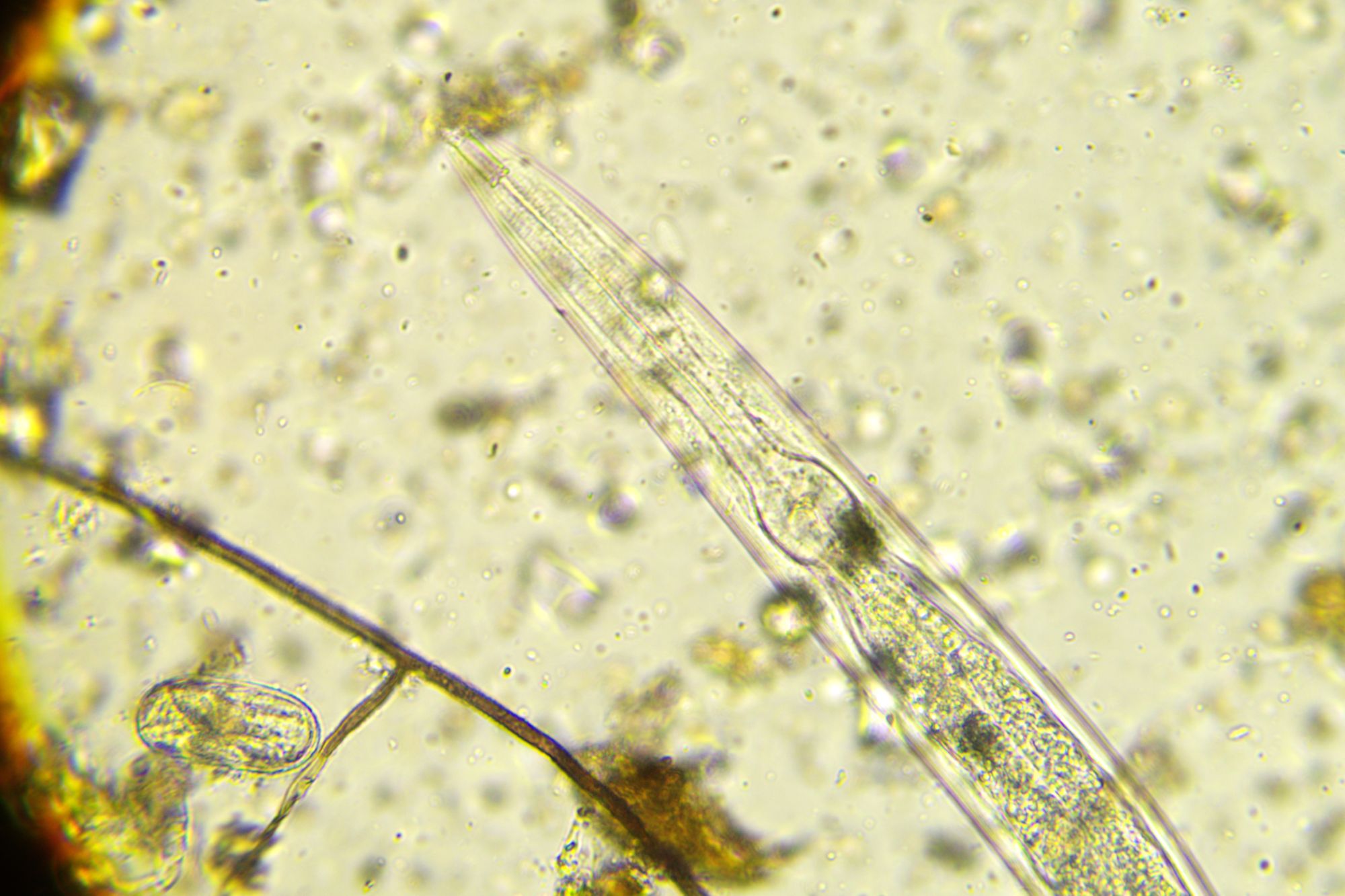
Summary: Project partner Yukon Seed and Restoration (YSR) is undertaking restoration activities in key areas of The First Nation of Na-Cho Nyak Dun’s traditional territory affected by recent wildfires. Tree planting in part of the Tekwänt’e Man Forest and bio-engineering techniques at an erosion site along Et’o Nyäk Tagé Valley will be complemented by a pilot of compost-based microbial treatments intended to enhance growth and resilience by restoring soil microbial functions. A key aspect of the trial is to determine whether the techniques are not only effective, but also practical to apply in the field. Outcomes include developing guidance on best practices for using the techniques in a restoration setting and holding a composting workshop on successful aerobic composting.
Year: 2025-28
Partner: Yukon Seed and Restoration
Funder: Climate Change Preparedness in the North, CIRNAC